|
|
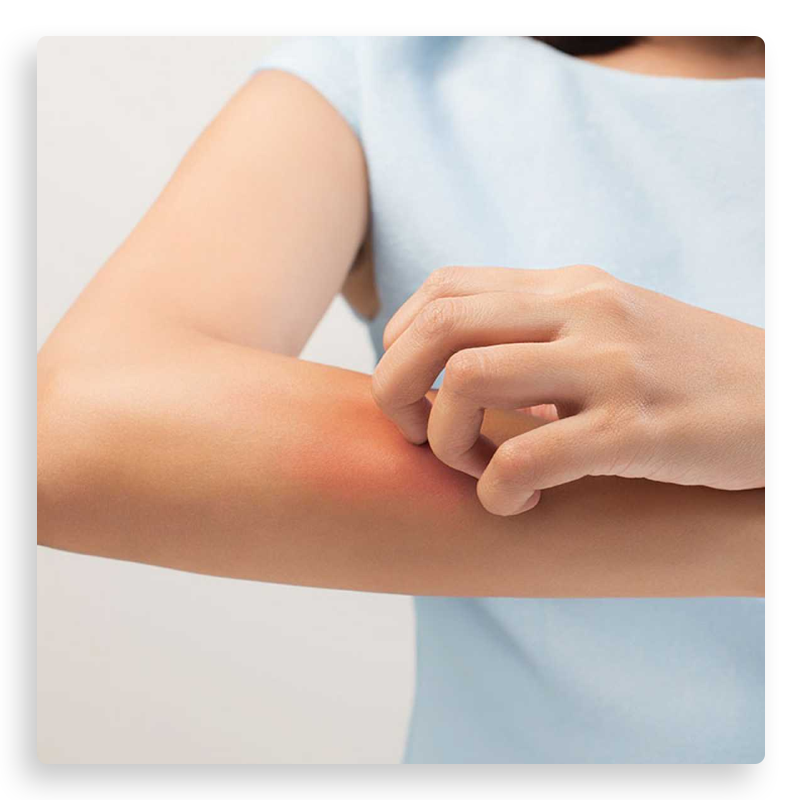
Urticaria (hives) is the characteristic allergic rash that appears suddenly, accompanied by intense itching and typical skin lesions known as wheals. Wheals are areas of swelling in the skin that appear pale in the center and red at the edges. Their size and shape vary, and they may appear individually, in groups, or cover large areas. Their main feature is that they resolve quickly, usually within minutes to 24 hours, without leaving permanent marks on the skin. Urticaria may occur anywhere on the body or remain localized in a specific area for some time, such as the limbs or trunk. In nearly half of the cases, it is accompanied by angioedema.
Common triggers of urticaria include foods such as nuts, shellfish, fish, eggs, milk, soy, wheat, and histamine-rich foods (e.g. strawberries, shrimp, lobster, cheese, spinach). Additionally, insect stings (such as wasps and bees), preservatives, latex, medications such as antibiotics, aspirin, non-steroidal anti-inflammatory drugs, and opioids, as well as airborne allergens like dust mites, cats, dogs, and pollen, may provoke urticaria. Physical factors such as cold, sunlight, vibration, exercise, water, and pressure can also trigger symptoms. Urticaria may occur on its own or as part of a generalized anaphylactic reaction, accompanied by symptoms affecting multiple organ systems. Chronic urticaria, however, is usually not caused by allergies. Infections, or a combination of infections and medications, are common causes of acute urticaria, especially in children. In contrast, chronic urticaria is typically of autoimmune origin, and stress appears to be an important factor that can trigger or worsen symptoms. Diagnosis is essential for both acute and chronic urticaria in order to determine the underlying cause. Treatment usually includes antihistamines, while in more severe cases, when antihistamines are not sufficient, specialized monoclonal antibodies or immunosuppressive medications may be used. |